Why an experiment
Most people pick the version that sounds best. We measure it.
You can debate in a meeting which posting will work best, or launch it and cross your fingers. A controlled experiment does something different: it compares several versions with real users and measures which one actually moves the needle, and by how much.
That way you scale the version that proved it works, with the numbers behind it.
How it's usually decided
Opine
Pick the version that wins the room.
Launch and wait
Publish it without knowing if it worked.
How we validate it
Experiment
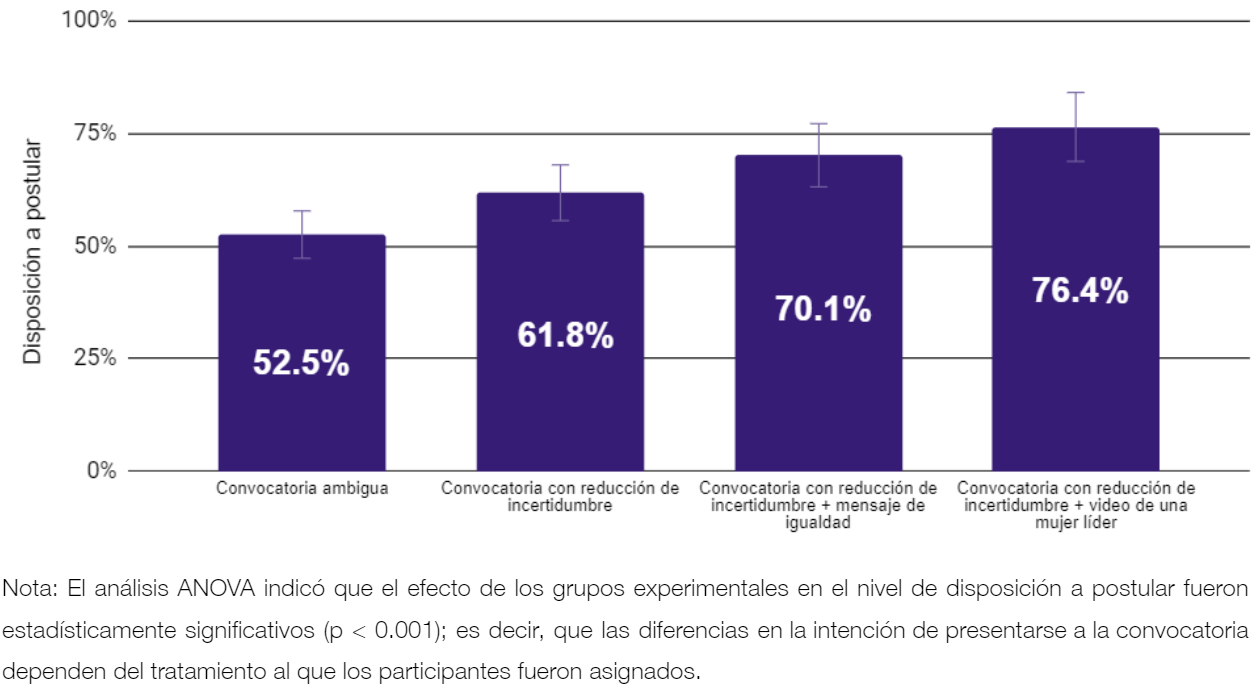
Four versions, real users, randomly assigned.
Scale the winner
With the effect size already measured.
Debating which version wins is quick and cheap. The experiment is what gives you the answer with evidence.
What an experiment gives you
Does it actually work, or does it just sound good?We measure the causal effect of each version with real users.
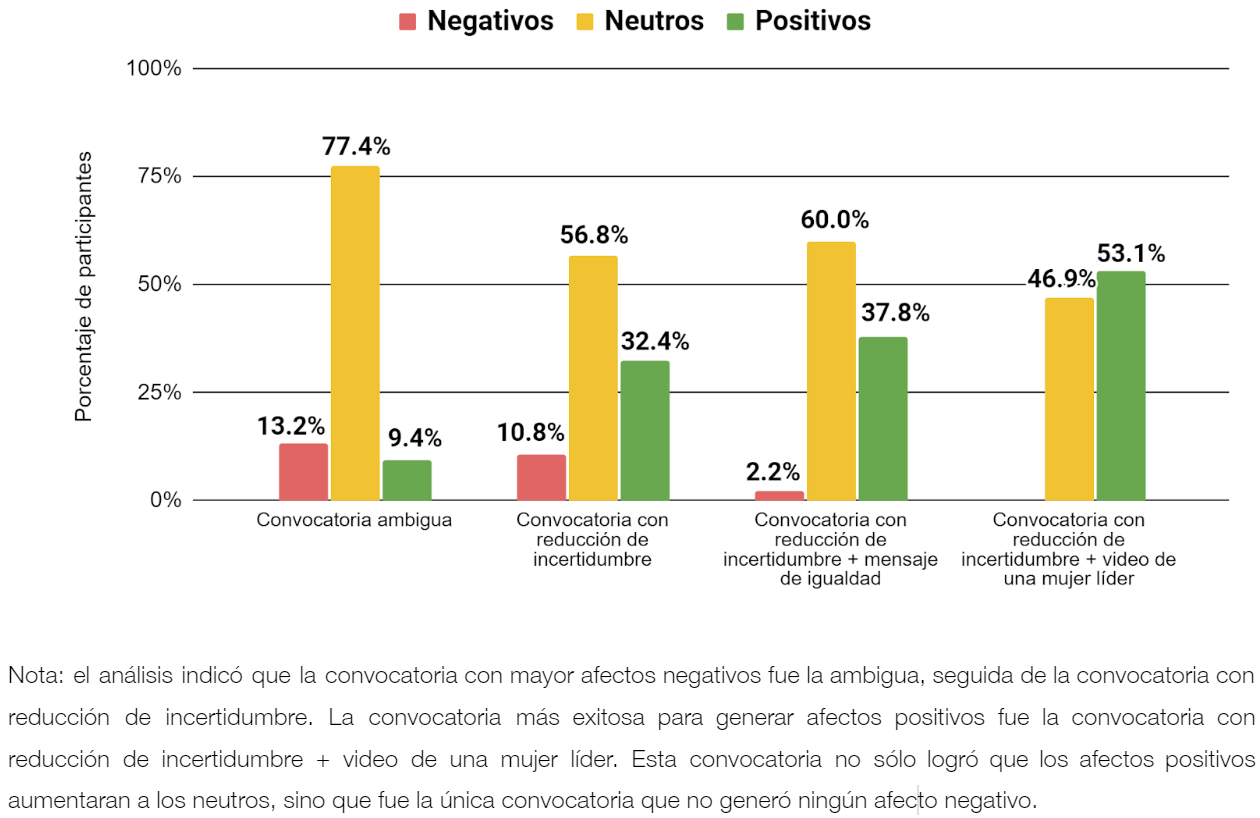
Which element is doing the work?We isolate each change's contribution: clarity, the equality message, and the video.
Is it worth scaling?You know the effect size before investing in the change.
What if one version does worse?You find out in the test, while you can still fix it.
How we measured it
We randomly assigned participants to one of four versions of the posting (a controlled trial). Each version added one element on top of the previous one: clearer information, then an equality message, and finally the video of a female leader. By comparing the groups, we measured the real effect of each element on intent to apply and on the emotions it generated. That's how we knew exactly which combination to take to production.